Underwater ROV control system
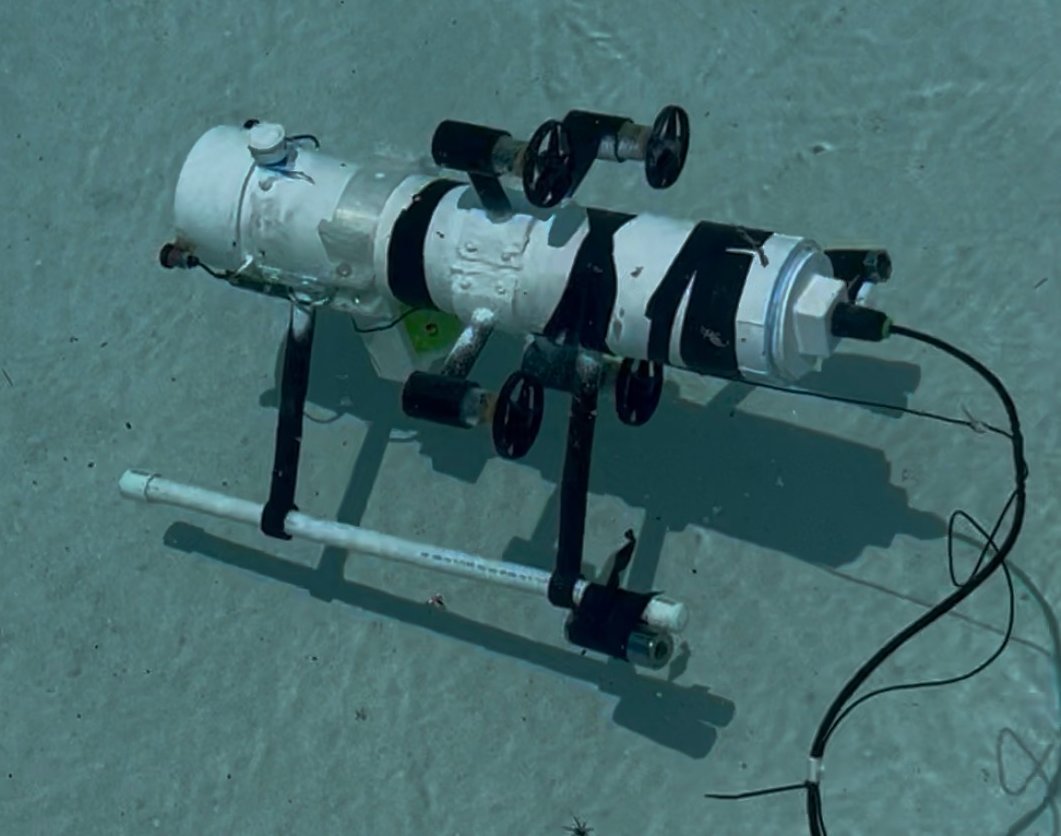
A remotely operated underwater vehicle, designed and built in high school on a fixed budget. My teacher, David Webster, proposed the project and funded it. The budget shaped nearly every decision: no off-the-shelf controller, no spare parts, and no second attempt at anything expensive.
Propulsion comes from four motors in a perpendicular cross arrangement, which lets the vehicle translate and rotate without any articulated mounts. A Python host drives Arduino Nano nodes over a serial protocol I designed, since the off-the-shelf options assumed a link quality a tether through water does not provide. Pressure, depth, and temperature sensors report on request rather than streaming, a DC ballast tank controls buoyancy, and a live dashboard gives the operator the vehicle’s full telemetry.
Input handling mattered more than it looks. A joystick at rest does not read zero, so without deadzone filtering the vehicle drifts continuously and wastes power correcting itself.